I met someone new over coffee a few days ago. Somewhere between the second cup and the check he asked what we do at 3S Coding, then answered his own question with another one: "do you develop everything?"
Fair. From the outside it does look like too much for one small company. ERP implementations. A warehouse and inventory product. A platform for field teams. Dashboards, AI agents, backup plans, and custom systems built from nothing. That's a lot of surface area for a shop that deliberately stays small.
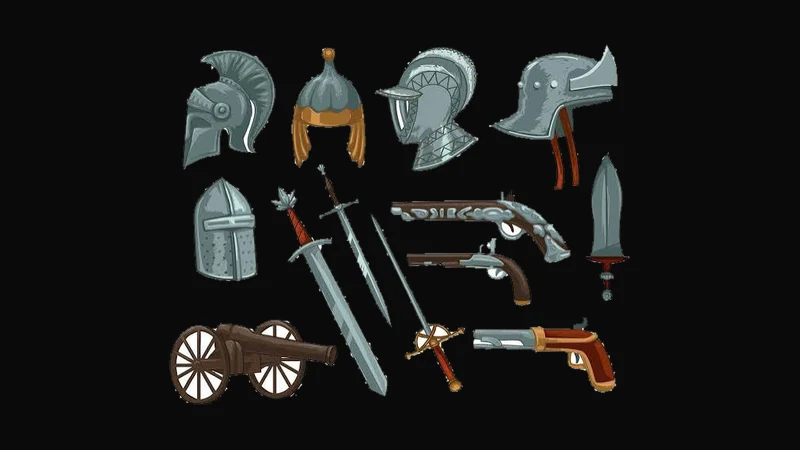
My answer took a detour through a medieval armory, so bear with me for two paragraphs.
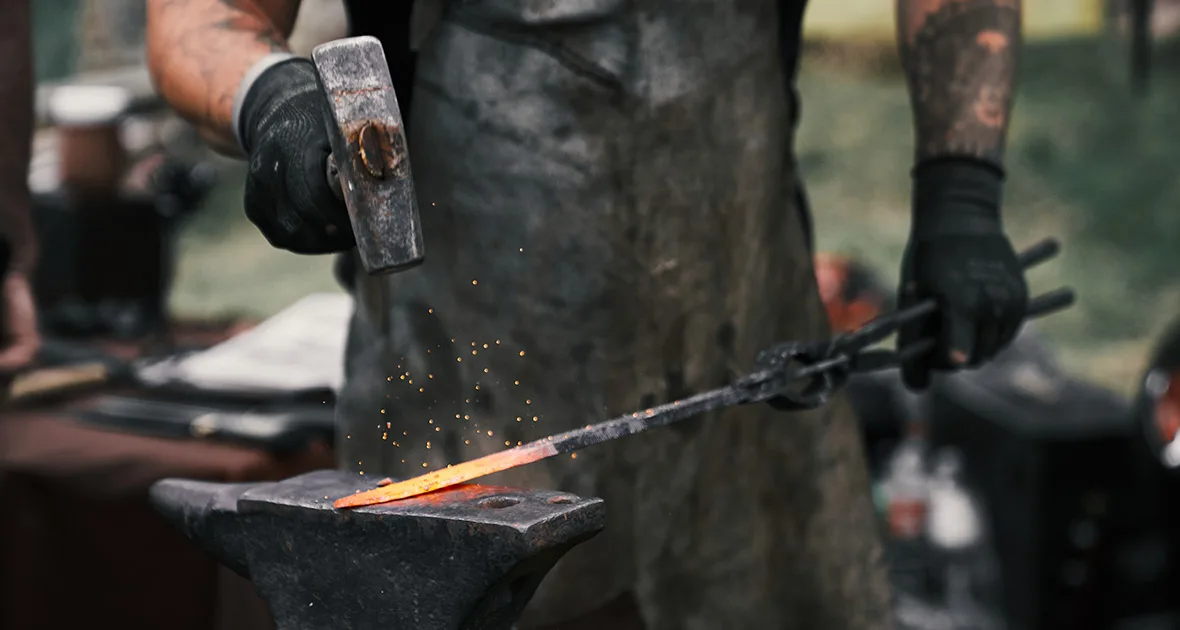
Warriors don't forge their own swords
A warrior spends his life learning to fight. He does not spend it in a forge. Someone else — someone who spent their own life on steel, heat and edges — makes the sword, fits the armour, and repairs both after the battle. The warrior turns up with equipment he trusts and does the single thing he's genuinely good at.
That division is why armies got stronger. Not because every man got better at everything. Because no man had to.
I've written about this metaphor from the other side before — the sword measured to a specific warrior's reach and grip, which is what custom software is. This is the wider version of the same point. Before you argue about whether the sword should be custom or pulled off a rack, notice that the warrior is not in the forge at all.
Businesses are the warriors here. A distributor is genuinely good at distribution — routes, relationships, margins, knowing which pharmacy pays on time and which one needs a phone call. A bakery is good at bread. Neither is good at software, and neither should be. Every hour an owner spends fighting a spreadsheet or chasing a vendor is an hour not spent on the thing that actually earns money.
We don't sell software. We sell the equipment a business fights with.
What the armory actually holds
Here's the full list, described by the problem each one solves rather than by its feature sheet.
- ERP. The full kit, for a business with real complexity — multiple entities, purchasing, manufacturing, accounting and stock that all have to agree with each other. We implement, extend and connect mature open-source platforms rather than sell licences, which is a position I've argued at length and haven't changed my mind about.
- Stokka. A full ERP is a lot of armour to walk in, and plenty of businesses are smaller than the weight of it. Stokka covers stock, warehouses and invoicing, with POS and manufacturing modules for the shops that need a cash register or a production line and nothing beyond that.
- Field Pulse. Distribution companies send their team out at eight in the morning and find out what happened at six in the evening, if they're lucky. Field Pulse puts visits, live orders and payment collections on a screen while the day is still happening.
- Dashboards and reports. A commander who can't see the field is guessing. Management needs the numbers that answer its actual questions, not the twelve reports the system happened to ship with.
- AI agents and automation. Repetitive daily work is where good employees go to be wasted, and re-typing the same data into two systems is where human error comes from. Both are solvable, and increasingly cheap to solve.
- Custom development. For the problems where nothing ready-made fits. Not most problems — but when it's the right call, buying the near-miss is more expensive than building the fit.
- Backups and redundancy. The part of the armory nobody thinks about until the battle. If the server dies on a Tuesday, does the business invoice on Wednesday? Most owners have never actually tested the answer.
Seven items, one workshop. None of them exists because it looked like a good market. Each one exists because a client walked in with a problem and there was nothing decent to hand them.
The part nobody counts
Businesses do try to forge their own gear, and it rarely starts as a decision. It starts as a series of reasonable ones. A cheap tool for invoicing because the ERP quote looked frightening. A spreadsheet to bridge the tool and the accountant, because it was faster than asking anyone. A second spreadsheet to check the first. A nephew who set up the point-of-sale and now owns half the operation in his head.
The honest cost calculation on infrastructure is never the licence fee. It's the staff hours spent operating tools instead of serving customers, the decisions delayed because the report takes three days to assemble, the orders lost because nobody saw them until evening, and the day the one person who understood the whole arrangement takes another job. That bill is already being paid. It just isn't on any invoice, so it never gets discussed.
It looks like seven businesses. It's one.
When I finished the list at the coffee table, the guy said what most people say: that's a lot of different things. I don't experience it that way, and after twenty-five years of doing this I'm fairly sure I'm right.
It's one question asked seven times. What does this business need in its hands so it can stop fighting its own tools and go do the thing it's actually good at? Sometimes the answer is an ERP. Sometimes it's the free version of a small product that runs on one laptop. Sometimes it's an automation that runs at midnight and saves four hours a week. Sometimes — genuinely — the answer is that the current setup is fine and the problem is a process, not software.
We're the blacksmith. We're not going out to fight your battle, and you shouldn't be standing in our forge.